
Why Changing Requirements Are a Feature, Not a Bug: Agile Development for SMBs
Published June 25, 2026
Every business owner has been there: you start a digital project with a clear vision, but halfway through, market conditions shift, a competitor launches something new, or a customer reveals a need you hadn't considered. Suddenly, the requirements you spent weeks defining no longer fit. For many small and medium businesses, this feels like failure. In our experience delivering custom websites, WordPress products, and automation systems at AUMCREATE, we've learned the opposite: changing requirements are a sign of a healthy, responsive business. The real challenge is how you manage them.

The Hidden Cost of Rigid Planning
Traditional development models, often called 'waterfall,' assume you can lock down every detail upfront. For an SMB, this is rarely realistic. By the time you've documented every feature, your market may have moved. Worse, a rigid contract that penalises changes creates a perverse incentive: teams deliver what was written, not what's actually needed. This leads to products that launch already obsolete. When we consult with clients, we point out that the true cost isn't the change itself—it's the failure to adapt.
What Agile Development Offers SMBs
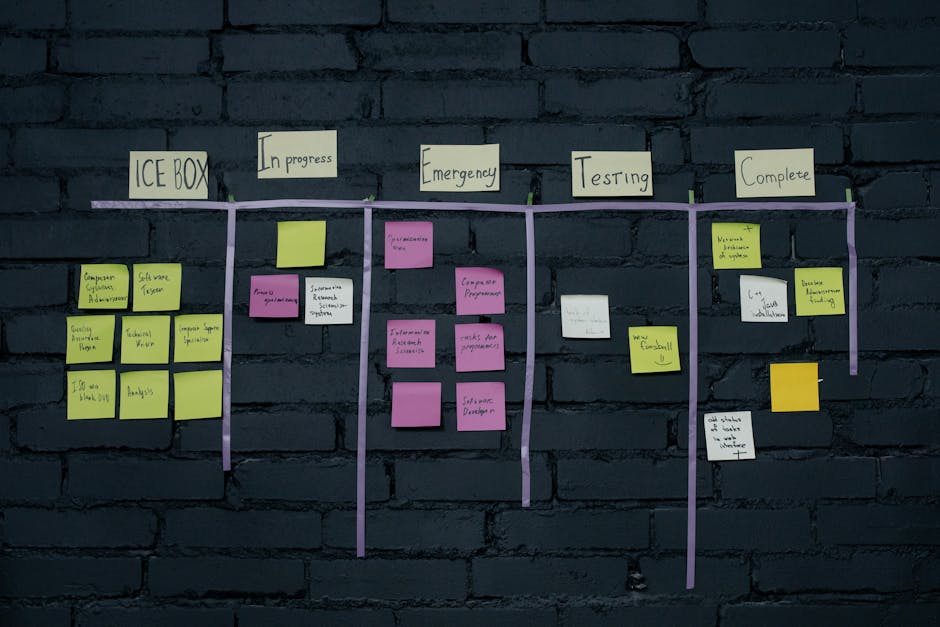
Agile development is a set of principles that embrace change. Instead of planning the entire project in one go, work is broken into short cycles (sprints). After each sprint, you see a working version of the product and can provide feedback. This means requirements can evolve based on real results, not guesses. For an SMB, this is powerful: you invest incrementally, see value sooner, and can pivot without losing everything you've paid for.
Key Principles That Protect Your Budget
- Iterative delivery: You get a functional piece every few weeks, not a single launch after months. This reduces risk: if something is wrong, you catch it early.
- Prioritised backlog: The team works on what matters most first. If budget runs tight, the most critical features are already done.
- Continuous feedback: You're involved throughout. Your changing requirements become part of the process, not a disruption.
- Fixed time, variable scope: Instead of promising everything in an unknown timeframe, we fix the budget and timeline, and flex the scope. You decide what's essential.

Why DIY or In-House Teams Struggle
Many SMBs attempt to manage changing requirements internally, often with a developer friend or a junior hire. What they underestimate is the discipline required. Without a structured process, 'agile' becomes chaos—constant interruptions, undocumented decisions, and scope creep that blows the budget. A professional agency brings not just technical skill but a framework that keeps changes productive. We've seen projects where a 20% requirement shift caused a 50% cost increase in an unstructured environment. With proper agile practices, that same shift might add only 10–15% because the team is already prepared to reprioritise.
What to Look for in an Agile Partner
Not every agency that claims to be agile actually delivers. When evaluating a partner for your next website or web app, ask these questions:
- How do they handle mid-project changes? Look for a clear change request process with transparent cost and timeline impact.
- How often do you see working software? Weekly or bi-weekly demos are a good sign.
- Who prioritises the backlog? You should have final say, not the developers.
- What happens if you run out of budget? A good partner will have already built the highest-priority items first, so you can pause or stop with a usable product.
The Bottom Line for Decision-Makers
Changing requirements aren't a sign of poor planning; they're a sign of a business that's paying attention. The question is whether your development process can handle that flexibility without punishing you. Agile, when done right, turns volatility into a competitive advantage. You get a product that fits your current reality, not a relic of what you thought you wanted months ago.
"The greatest risk in digital projects isn't change—it's building something nobody needs. Agile development helps SMBs stay aligned with real demand."
If your team is wrestling with shifting priorities and wants a partner who treats change as a feature, not a problem, talk to us at AUMCREATE. We've built systems that adapt with your business.