
When Requirements Keep Changing: Agile Development Principles for SMBs
Published June 2, 2026

For many small and medium business owners, the phrase “requirements changed” triggers a familiar mix of frustration and resignation. You’ve been there: a website or app project starts with a clear brief, but halfway through, market conditions shift, a competitor launches something new, or internal stakeholders realise they forgot a critical feature. The result? Delays, budget overruns, and strained relationships with your development team.
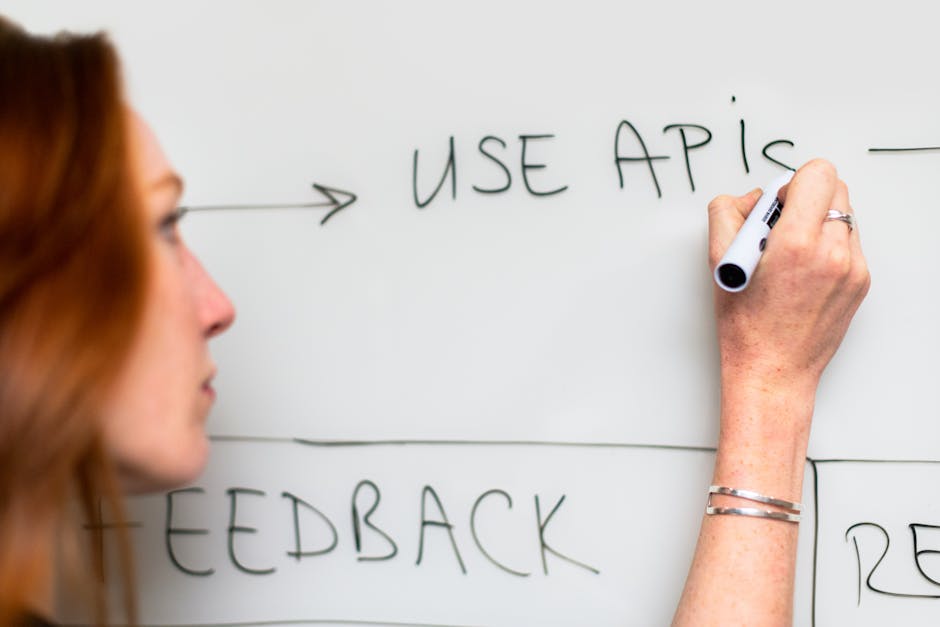
The problem isn’t that requirements change—that’s inevitable in any growing business. The problem is that most development approaches treat change as a failure rather than a reality. Traditional waterfall methods lock scope early, making even small amendments expensive and slow. Agile development, when done properly, flips this dynamic. It doesn’t prevent change; it accommodates it as a natural part of building something valuable.
Why SMBs Need a Different Approach
Large enterprises can afford dedicated product managers, scrum masters, and multi-week sprint cycles. SMBs don’t have that luxury. Your team is lean, your timeline is tight, and every dollar counts. Yet you still need software that adapts as your business evolves. The key is not to adopt enterprise agile frameworks wholesale, but to extract the principles that matter most for your context.
Principle 1: Prioritise by Value, Not by Plan
In a fixed-scope project, every feature on the list is treated equally until it’s done. In an agile engagement, we continuously reorder work based on business value. When we deliver for SMB clients at AUMCREATE, we start by identifying the core functionality that will drive revenue or save time—what’s sometimes called the Minimum Viable Product (MVP). Everything else is a candidate for later sprints.
This means that if a new requirement emerges mid-project—say, a payment integration your sales team just realised is essential—we can swap it in for a lower-value feature that can wait. The project stays on budget, and you get the most important capabilities first. The risk of building something nobody uses drops dramatically.

Principle 2: Short Feedback Loops
One of the biggest costs in software development is building the wrong thing. The longer you go without seeing working software, the higher the chance you’ll discover a mismatch at the last minute. Agile solves this with short cycles—typically one to three weeks—where you see a working increment of the product.
For an SMB, this doesn’t mean you need daily stand-ups or elaborate retrospectives. It means you should expect to review progress frequently enough that course corrections are cheap. A good development partner will show you a functioning prototype early, not a PowerPoint deck. That’s when you’ll spot the real issues—like a workflow that doesn’t match how your team actually operates.
Principle 3: Embrace Change as a Feature
When a client says, “We need to change the user registration flow,” the instinct is to say, “That will delay the launch.” But in an agile mindset, that change is simply new information. The question becomes: Is this more important than something else in the current sprint? If yes, we reprioritise. If no, it goes into the backlog for later.
This only works if the development team has structured the codebase to be flexible. Monolithic, tightly coupled architectures make even small changes expensive. That’s why we build modular systems where components can be swapped or extended without rewriting everything. It’s a technical decision with direct business impact: you pay less for change because the system was designed to absorb it.
What SMBs Underestimate
Even with agile principles, there are traps that SMBs frequently fall into. One is scope creep disguised as “agility.” Just because you can change requirements doesn’t mean you should change them every week. Agile works best when changes are deliberate and evaluated against business goals, not when every stakeholder’s whim gets immediate attention. A responsible development partner will push back on changes that add complexity without clear ROI.
Another underestimated factor is internal alignment. If your marketing team wants one thing and your operations team wants another, no development methodology will resolve that conflict. Agile clarifies priorities by forcing trade-offs, but it can’t create consensus where none exists. Before starting any project, invest time in getting key decision-makers on the same page about what success looks like.
Choosing the Right Development Partner
Not every agency or freelancer actually practices agile. Some use the terminology but still operate on a fixed-price, fixed-scope model that penalises change. When evaluating a partner, ask how they handle mid-project changes. Look for responses that talk about reprioritisation, not change requests with extra fees. A good partner will also demonstrate a track record of delivering iteratively—showing you working software early and often.
For SMBs, the ideal arrangement is a time-and-materials or retainer-based engagement with a clear backlog and regular check-ins. This gives you the flexibility to adapt without paying for bureaucracy. The partnership should feel like an extension of your team, not a vendor you lob specifications at.
When Custom Beats Off-the-Shelf
Some SMBs try to avoid change-management headaches by buying a SaaS product. That works for generic needs—email marketing, accounting, CRM. But when your core business process is unique, or when integration between systems is critical, off-the-shelf software becomes a straitjacket. You end up changing your operations to fit the software, which is often more expensive than building something tailored.
Custom development with agile principles gives you the best of both worlds: a solution that fits your exact needs today, with the ability to evolve as those needs change. The upfront investment is higher than a monthly SaaS subscription, but the long-term value—in efficiency, competitive advantage, and adaptability—is often far greater.
“The biggest risk in software isn’t changing requirements. It’s building something that doesn’t solve a real problem. Agile minimises that risk by making change a normal part of the process.”
If your team is struggling with shifting project scopes or wondering whether custom development is even viable, talk to us. We help SMBs turn uncertainty into a strategic advantage—building systems that flex as fast as your business does.